
Saigon: Forms, Faces, and Feelings
As Rick Blaine famously says in Casablanca, “We’ll always have Paris.”, it is a poignant reminder of the places that remain etched in our souls, and for me, that place is Saigon. Often remembered in history as the “Paris of the Orient”, the city bears a legacy of beauty that has evolved far beyond its colonial moniker. Today, Saigon is a city defined by the relentless tension between its past and its future, and while its skyline changes, my connection to it remains constant, no matter where life takes me, I’ll always have Saigon.
Mapping the Urban Fabric
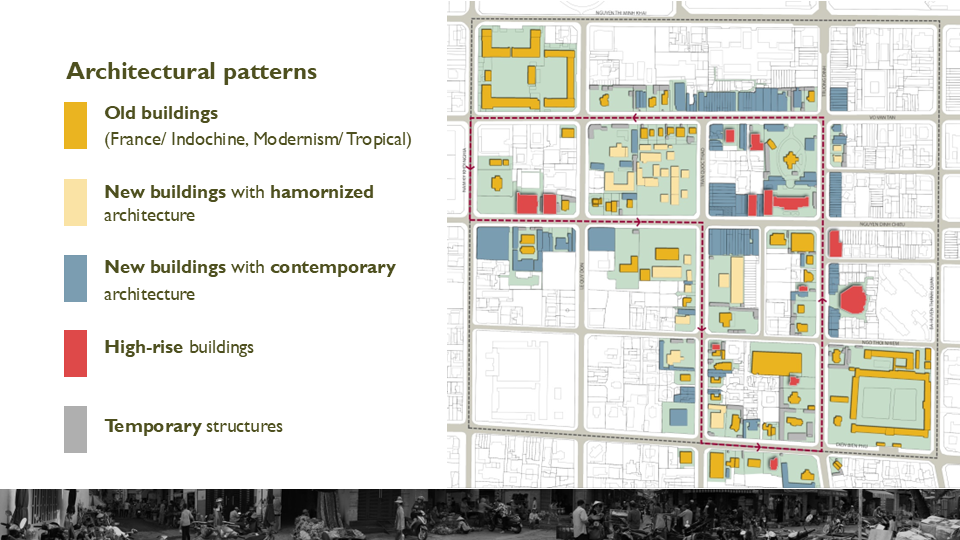
Saigon is a city defined by the relentless tension between its past and its future, where architectural layers overlap to create a unique urban fabric. To understand the rhythm of life here, one must first look at the physical structures that anchor the streetscape, as illustrated in the study of architectural patterns. This city acts as a living archive, where the density of the built environment directly influences how its people move, work, and exist. There is a profound heartbeat here that I feel every time I navigate these streets, a sense of belonging that transcends the simple geometry of a city map.
The Enduring Heritage
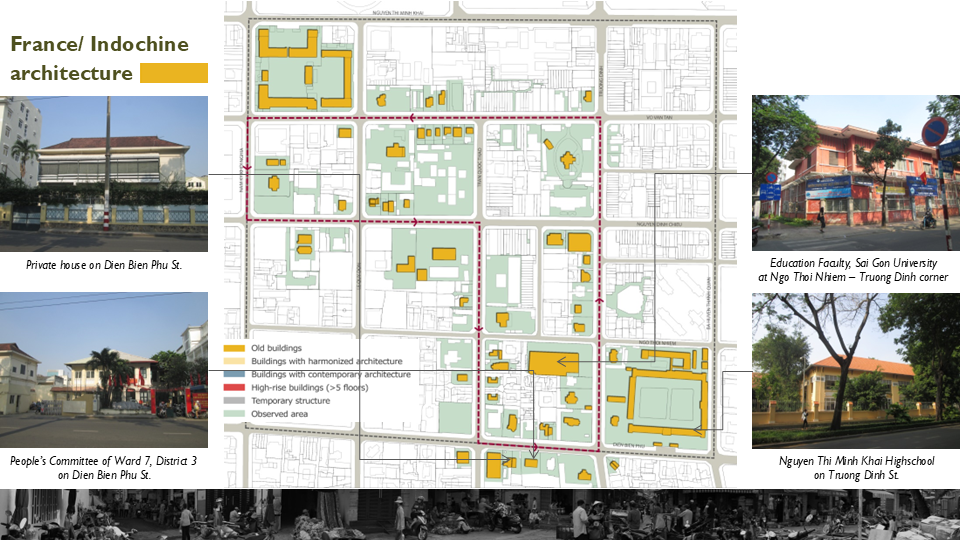
The foundation of the city’s identity is rooted in its older buildings, ranging from French/Indochine structures to modernist tropical designs. Walking past private houses on Dien Bien Phu Street or the educational facilities at the corner of Ngo Thoi Nhiem and Truong Dinh, one feels the weight of history these structures provide. These walls hold the memories of generations, standing as quiet, sturdy witnesses to the passage of time in my hometown.
Preserving Architectural Continuity
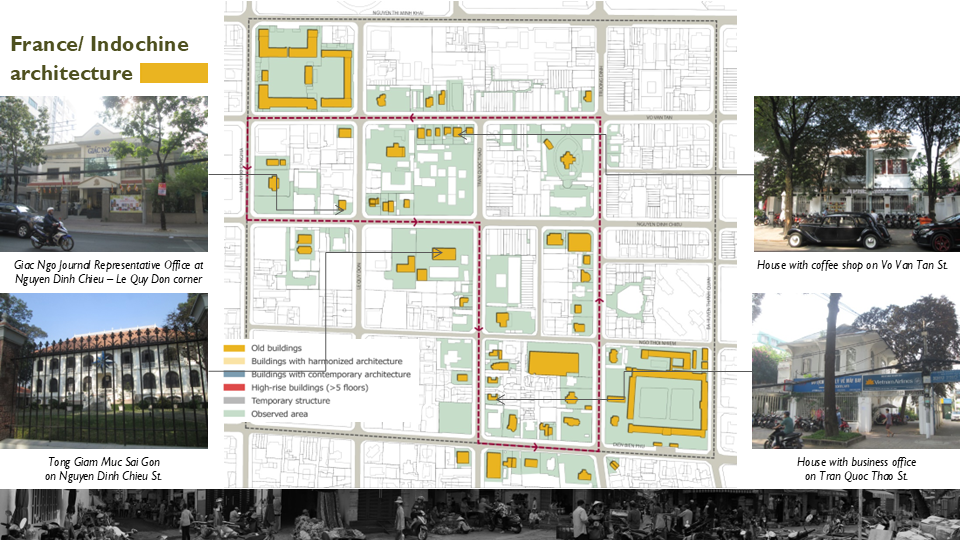
This sense of heritage is further reinforced by the distinct character of the Giac Ngo Journal office and various administrative landmarks dotted across Nguyen Dinh Chieu Street. These older forms maintain a tangible presence, bridging the gap between historical eras and the faces of the people who walk these streets. Seeing these familiar facades fills me with a warm nostalgia, grounding the city in a shared sense of time and place that feels like coming home.
Climate and Modernist Adaptation
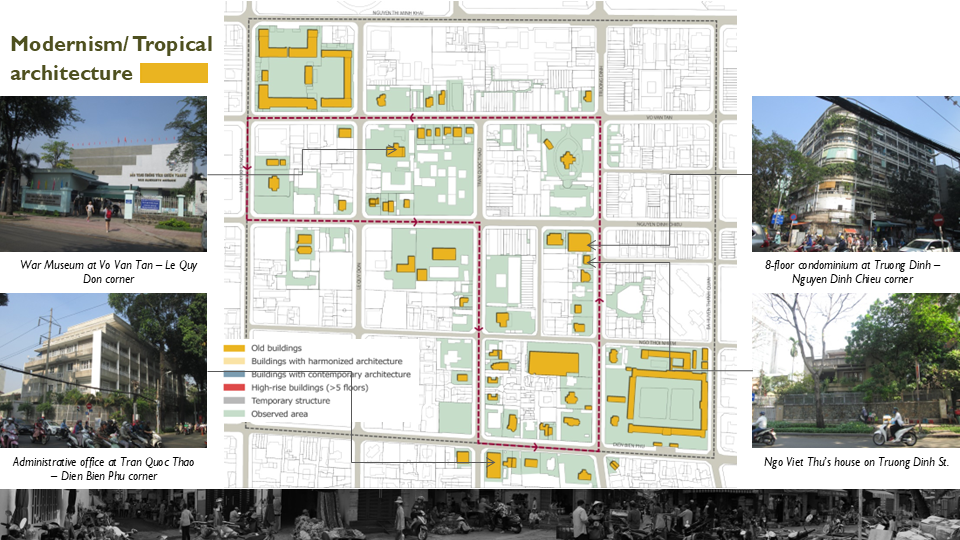
Beyond the colonial legacy, the city showcases a blend of styles, including notable examples of modernism and tropical architecture. Landmarks like the War Museum and various administrative offices at major intersections illustrate how these designs have been adapted to fit the local climate. These spaces are perfectly suited to the Saigon sun and the heavy rains, creating shaded retreats that offer comfort to anyone seeking a moment of respite from the tropical heat.
Seeking Visual Harmony
There is also a visible effort toward harmonized architecture, where new buildings are designed to respect the scale and aesthetic of their surroundings. Projects like the HCMC Political School and various office structures at the intersection of Dien Bien Phu and Tran Quoc Thao reflect this desire to blend new functional needs with existing neighborhood character. This harmony fosters a sense of visual stability, a quiet assurance that while the city grows, it does not have to lose its essential personality.
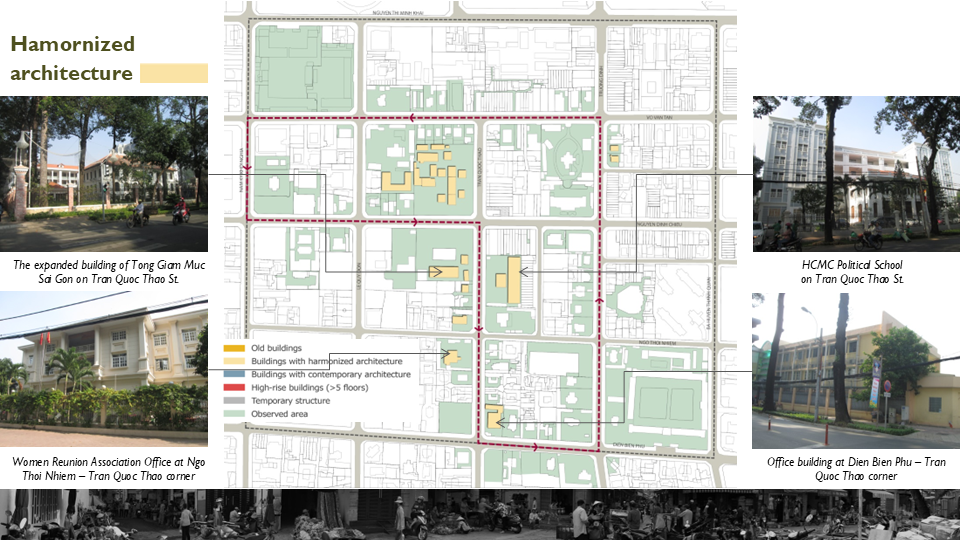
The Emotional Landscape
The feelings of Saigon are perhaps best understood in the quiet transitions, the shift from a bustling, sun-drenched intersection into the cool, shadowed sanctuary of a narrow alleyway. There is a specific, bittersweet comfort in knowing these spaces so intimately. To me, Saigon is not just a collection of coordinates; it is a tapestry of moments, smells, and sounds. It is the feeling of the humid air on my skin, the constant hum of life, and the knowledge that no matter how far I go, half of my heart remains anchored in these streets.
The Contemporary Commercial Surge
The surge of contemporary architecture is undeniable, introducing glass facades and modern convenience to historic corners. Developments like the Coopmart at the Nam Ky Khoi Nghia intersection and new office buildings stand as markers of a rapidly shifting commercial landscape, changing the faces of the streets into hubs of accessibility, modern consumption, and bustling social interaction. While these buildings speak to a new era, they are now just as much a part of the city’s changing face as the older villas.
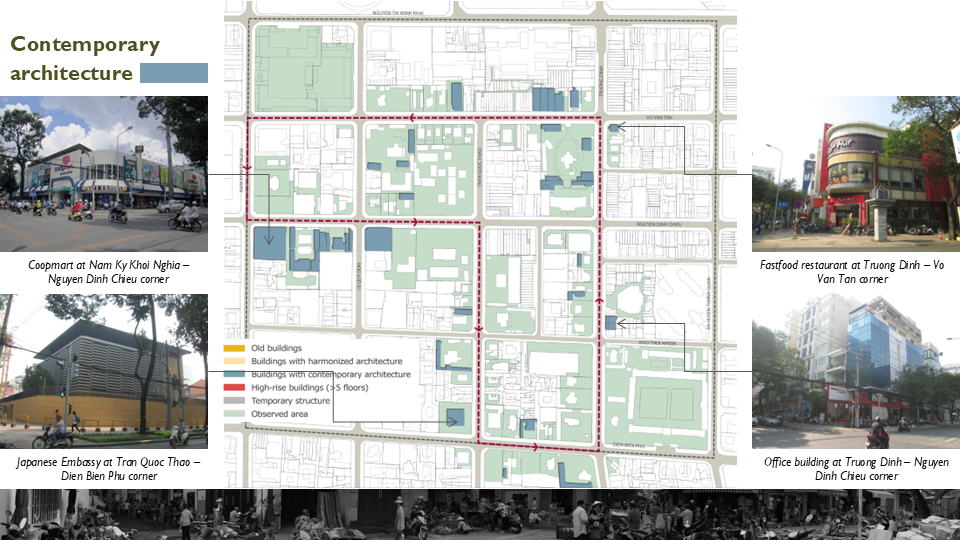
Evolving Row Houses Typologies
This shift is equally apparent in the proliferation of modern row houses that occupy streets like Vo Van Tan and Truong Dinh. These structures are transforming traditional residential blocks into high-density zones, serving as a primary site for commerce and daily life. The feeling here is one of vibrant proximity, where the line between home, work, and street-side leisure becomes beautifully blurred, reflecting the industrious and social nature of my people.
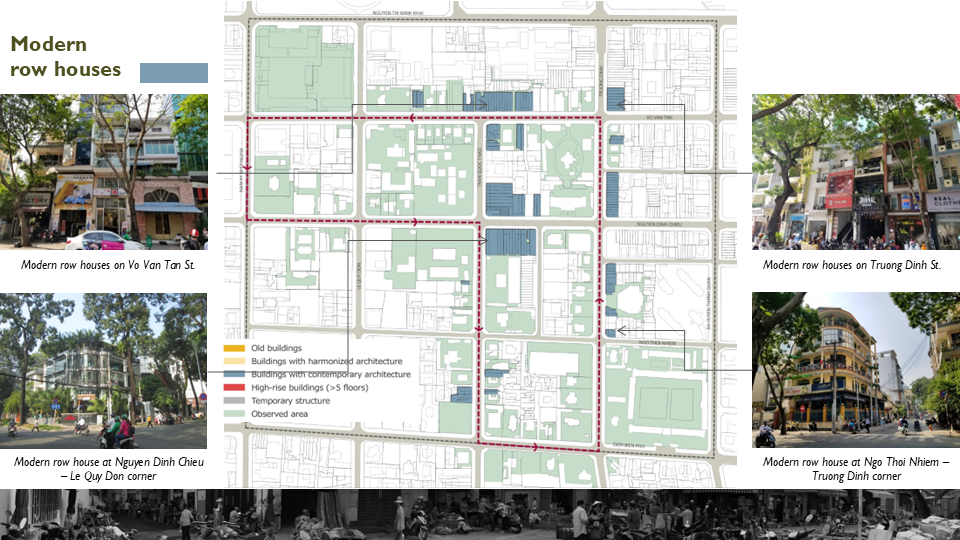
Scaling the Vertical Skyline
The most dramatic transformation of the Saigon skyline comes from the rise of high-rise buildings. Structures like the L’eman Apartment and the various condominiums along Truong Dinh Street symbolize a city pushing upward, changing not just the view, but the scale of human interaction and the feeling of the streets below. By studying these forms and witnessing the faces of those navigating them, we gain insight into a city that is constantly redefining its own identity, balancing the preservation of its collective memory with the inevitable, pulsing pace of modern growth. It is a city of constant transformation, yet through it all, the soul of Saigon remains beautifully and undeniably my own.
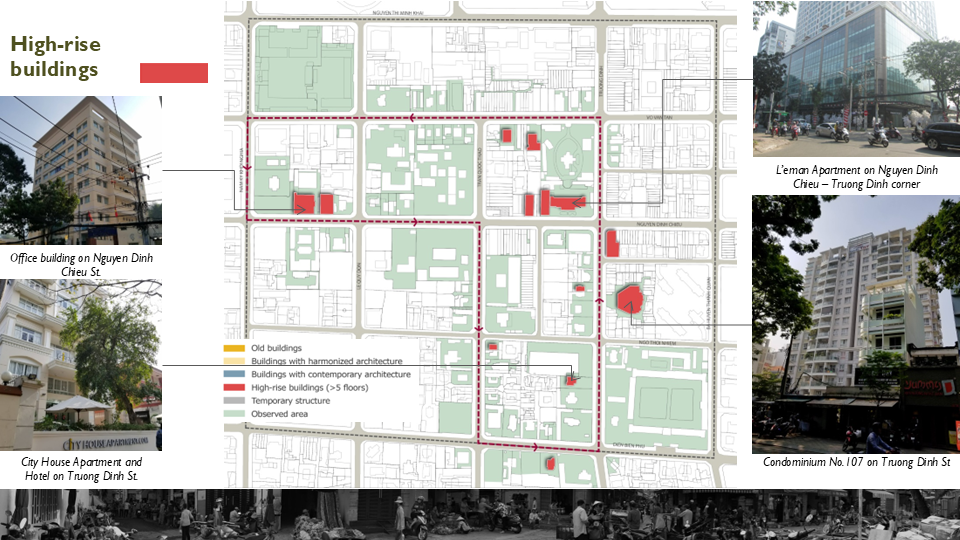
A City of Shifting Faces
Ultimately, Saigon’s architecture serves as more than just a backdrop; it is the stage for the life that unfolds within it. Every map of urban patterns, from the enduring colonial villa to the rising glass of a new apartment complex, is a testament to the people who inhabit these spaces daily. The true spirit of the city is found in the transitions: moving from the quiet shade of a tree-lined street into the electric hum of a busy intersection. Yet, it is not the structures themselves that breathe life into these spaces, but the people who occupy them. You see it in the soft morning light, as a vendor carefully sets up a stall against a weathered wall, or in the quiet camaraderie of neighbors sharing stories on plastic stools. These individuals are the city’s true architects, carrying the resilience, humor, and kindness that define Saigon. It is this human connection that transforms brick and mortar into something vibrant, alive, and profoundly home.
The research project was presented at the 2018 Students’ Conference on Sustainable Urban Development held on May 29, 2018 at Southern Institute of Social Sciences by the Vietnamese-German University.